

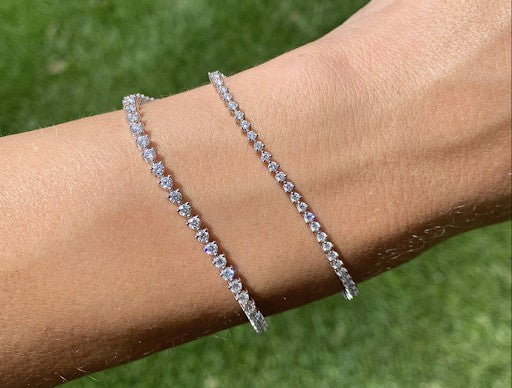
These days, when people talk about man made diamonds, there’s less skepticism and more curiosity. Less “is it real?” and more “why wouldn’t you?” And once you start looking into it, you realise this shift didn’t come out of nowhere.
It’s been building for a while.
Table of Contents
Diamonds, Demystified — What “Man Made” Actually Means
Let’s clear something up straight away, because this is where confusion usually creeps in.
Man made diamonds aren’t fakes. They’re not substitutes or clever knock-offs. They’re real diamonds — chemically, physically, optically identical to mined ones. The only real difference is where they’re formed.
Instead of forming deep underground over billions of years, these diamonds are grown in controlled environments using advanced technology that replicates natural conditions. Same carbon structure. Same sparkle. Same hardness. Same emotional weight when someone opens a ring box and forgets how to breathe for a second.
You might not know this, but even professional gemologists need specialised equipment to tell the difference. To the naked eye? Impossible.
And that’s kind of the point.
Why More Australians Are Paying Attention Now
Here in Australia, we tend to approach trends with a healthy dose of skepticism. We don’t jump on things just because they’re “new.” We ask questions. We weigh the pros and cons. We think about value — not just price, but long-term meaning.
That’s why man made diamonds are gaining traction here.
For one, there’s transparency. People like knowing where things come from. They want clarity, not mystery. When a diamond’s origin can be traced without a long supply chain full of unanswered questions, that matters.
Then there’s sustainability. Mining has a footprint — environmentally and socially. While lab-grown diamonds aren’t impact-free (nothing really is), their overall footprint is significantly lighter. For buyers who care about that balance — beauty without excess — it feels like a step in the right direction.
And yes, cost plays a role too. Not in a “cheap” way, but in a sensible one. When couples realise they can choose a larger or higher-quality stone without stretching themselves thin, it opens doors. Suddenly, the conversation shifts from compromise to possibility.
The Emotional Side No One Talks About Enough
Here’s the part that surprised me the most.
People often assume choosing a man made diamond is a purely logical decision. Ethical. Financial. Practical. But when you actually speak to buyers — couples, especially — emotion is all over it.
I’ve heard people say things like, “It feels better starting our life together without that weight.” Or, “I like that our ring reflects our values, not just tradition.”
That’s not cold logic. That’s deeply personal.
Diamonds have always been symbols — of commitment, of permanence, of intention. Choosing how that symbol comes into existence is just another layer of meaning. And honestly, that makes the story richer, not poorer.
Jewellery Is Changing, Whether We Admit It or Not
Walk into a modern jeweller today and you’ll notice something subtle but important.
The conversation has changed.
Instead of being told what you should want, you’re asked what matters to you. Design comes first. Lifestyle comes first. Values come first. The diamond — mined or man made — follows that conversation, not the other way around.
Custom pieces are booming. Minimalist designs are everywhere. Heirloom remakes using lab-grown stones are becoming surprisingly common. It’s less about status and more about storytelling.
And when jewellers share educational resources or curated guides — like a well-organised Listado de diamantes — it helps buyers make decisions that feel informed rather than pressured. That kind of transparency builds trust, which is everything in this industry.
Are Man Made Diamonds “Too Perfect”?
This is a question I hear a lot, and it’s usually asked with a half-smile.
There’s a belief that imperfections give things character — and that’s true. But here’s the thing: perfection doesn’t erase meaning. It just changes how meaning is created.
Some people love the idea of a diamond formed over billions of years. Others love the idea of one created through human innovation — science meeting artistry. Neither is wrong. They’re just different stories.
And honestly? Plenty of lab-grown diamonds still have unique characteristics. They’re not sterile or soulless. They catch light differently depending on cut. They age alongside their wearers. They become part of a life, just like any other piece of jewellery.
What This Shift Says About Us
When you zoom out, the rise of man made diamonds isn’t really about jewellery at all.
It’s about choice.
It’s about people feeling empowered to ask questions, challenge old assumptions, and define value on their own terms. It’s about recognising that tradition can evolve without disappearing.
In Australia especially, this resonates. We respect heritage, but we’re not bound by it. We like solutions that make sense. We appreciate beauty, but we also appreciate honesty.
And maybe that’s why this movement feels less like a trend and more like a quiet recalibration.
A Final Thought, Just Between Us
If there’s one thing I’ve learned writing about jewellery and speaking to people across the industry, it’s this: the “right” diamond isn’t about origin, size, or price tag.
It’s about alignment.
When what you choose reflects who you are — your values, your relationship, your outlook — that’s when it feels right. That’s when a piece of jewellery stops being an object and starts being a marker in time.
So whether someone chooses a mined diamond, a vintage stone, or one grown carefully in a lab, what matters most is intention. The rest is just sparkle.


